

Ecommerce SEO
Ecommerce SEO
5
Google Partner · Shopify Partner · Real ROAS proof, not promises
Help more shoppers find your products when they search online. Thrive Converters provides Ecommerce SEO services that improve the visibility of your store, category pages, and product pages in organic search. We improve the key areas that can affect Ecommerce SEO performance, including technical SEO, site structure, product and category optimization, content, internal linking, and tracking. The goal is to make your store easier for search engines to understand and easier for the right customers to find, explore, and buy from.
Even a strong online store can miss traffic and sales when important pages are hard to find, technical issues confuse search engines, or product content does not match what shoppers are searching for.
Ecommerce SEO
5
Shoppers may be searching for the products you sell, but your key product and category pages may not appear often enough in search results.
Large catalogs, filters, duplicate URLs, redirects, canonical tags, platform changes, and other technical issues can make it harder for search engines to crawl and index the right pages.
Thin, repeated, or unclear content can make it difficult for search engines to understand each page and for shoppers to see why a product or category is relevant to them.
Important products and categories can lose visibility when they are buried too deep in the site or do not have enough useful internal links.
More organic traffic is useful, but it should also support business results. Without proper ecommerce tracking, it can be difficult to see which pages and searches are helping generate product views, purchases, revenue, leads, or other important actions.
Every online store has different SEO needs. We focus on the areas that can help more shoppers find your products, make your website easier to use, and improve the overall search performance of your store.
The process starts with a review of your website, technical setup, product and category pages, site structure, content, competitors, and tracking. The findings are then organized into a clear priority plan.
Search behavior is reviewed to understand how shoppers look for your products, categories, and related topics. This helps connect the right keywords with the right pages.
Technical issues can make it harder for search engines to crawl, understand, or index your store. Common areas include duplicate pages, redirects, canonical tags, crawl problems, and indexation issues.
Important product and category pages are improved with clearer content, headings, metadata, internal links, and other SEO elements that help shoppers and search engines understand each page.
A clear site structure makes categories, subcategories, and products easier to reach. Better internal linking also helps important pages receive more attention from search engines.
Useful content can support both product discovery and buying decisions. This may include category content, buying guides, comparisons, FAQs, and other search-focused resources.
Organic visibility, traffic, key landing pages, and ecommerce actions are tracked over time. Reporting helps show what is improving, what needs attention, and where the next opportunities are.
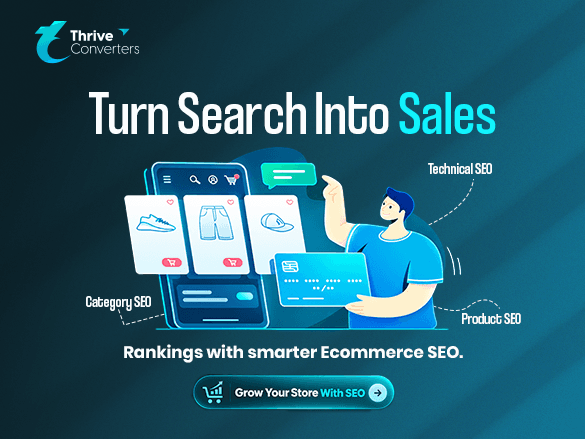
Ecommerce websites can have hundreds or even thousands of pages, so trying to fix everything at once is rarely the best approach. The strategy starts by finding the issues and opportunities that can have the biggest impact on search visibility, customer experience, and business growth.
First, we look at your ecommerce platform, product catalog, important categories, target customers, competitors, markets, and business goals. This helps keep the SEO strategy focused on what matters most.
The audit checks how search engines crawl and index your store, along with site structure, duplicate content, filters, product and category pages, internal links, structured data, content, and tracking.
High-impact problems are handled first. This may include crawl or indexing issues, weak high-value pages, poor site structure, duplicate content, or tracking gaps.
Important category and product pages are improved around real search demand and the way shoppers use your store. Site structure, internal links, templates, and supporting content are also reviewed where needed.
Clear SEO rules and page standards help support new products, categories, content, and markets as your ecommerce business grows.
Search visibility, traffic, technical health, and ecommerce performance are reviewed regularly. The data helps show what is improving, what still needs attention, and what should be worked on next.
Ecommerce SEO gets more complex as your store grows. More products, categories, filters, and platform settings can create search problems if they are not managed carefully. These services help search engines find the right pages and make it easier for shoppers to discover your products.
Technical problems can make important pages difficult for search engines to find or index. We manage crawl issues, indexation, redirects, canonical tags, site performance, and other technical problems that can affect organic visibility.
Filters, sorting options, product variations, and URL parameters can create many similar pages. These URLs are reviewed and controlled so search engines can focus on useful product and category pages instead of unnecessary duplicates.
Category and collection pages are optimized around the way shoppers search. Clear targeting, useful content, headings, internal links, and page structure help customers discover products and help search engines understand each category.
Product pages are improved with clear titles, useful descriptions, metadata, internal links, and relevant structured data. This helps search engines understand product details and makes pages more useful for shoppers.
A clear structure makes it easier to move through your store. Categories, subcategories, products, and supporting content are connected so important pages are easier for both shoppers and search engines to reach.
Buying guides, comparisons, FAQs, category content, and other useful resources can answer customer questions and support product discovery. Clear content structure also makes your store information easier for traditional search engines and AI-driven search experiences to understand.
Shopify, Magento, BigCommerce, WooCommerce, and other platforms can have different SEO challenges. Platform-specific work is handled based on how each store is built while the overall strategy stays focused on organic visibility and product discovery.
Ecommerce SEO is a good fit for online stores that want more shoppers to find their products through search. It can support growing brands, large catalogs, established retailers, and businesses that want to build a stronger source of organic traffic over time.
A clear process keeps Ecommerce SEO work organized and focused. Each step shows what needs attention, what is being improved, and what should happen next.
The process starts with a review of your website, ecommerce platform, search visibility, technical health, site structure, product and category pages, content, competitors, and tracking.
Audit findings are turned into a clear action plan. The most important opportunities are prioritized based on business value, search demand, technical impact, and urgency.
Important technical problems are addressed first. This can include crawling, indexing, canonical tags, redirects, duplicate URLs, faceted navigation, structured data, and site architecture.
High-value product and category pages are improved with better targeting, content, metadata, internal links, and page structure to match how shoppers search.
Helpful content and relevant authority-building work are added where they can support important pages, answer customer questions, and strengthen organic visibility.
Search visibility, organic traffic, technical health, important pages, and ecommerce actions are reviewed over time. The results help guide the next priorities and expand the SEO strategy as your store grow
Ecommerce SEO needs more than basic website optimization. Thrive Converters connects technical SEO, product and category pages, site structure, content, and performance data around the goals that matter most to your store.
Ecommerce SEO
5
Priorities are based on your most important products, categories, customers, and conversion goals. This keeps the work focused on business value instead of a generic SEO checklist.
Technical fixes are planned alongside product pages, category pages, internal linking, content, and the way shoppers move through your store. This helps improve the website as one connected ecommerce system.
Large catalogs, filters, product variations, discontinued items, duplicate URLs, and platform settings can create difficult SEO problems. These issues are considered when deciding what should be crawled, indexed, optimized, or redirected.
Recommendations are explained in clear language, with a reason behind each important change. Reporting shows what was completed, what the data shows, and what should be worked on next.
If Ecommerce SEO depends on wider website improvements, the strategy can connect with On-Page SEO, Off-Page SEO, and other SEO services while keeping the main focus on your online store.
Ecommerce SEO is the process of improving an online store so its products, categories, and helpful content can be found more easily in organic search. It includes technical SEO, site structure, product and category optimization, internal linking, content, structured data, and other search signals.
If shoppers are not finding your products in search, the first step is understanding what is getting in the way. Thrive Converters can review your technical SEO, product and category pages, site structure, search opportunities, and tracking. We’ll help you find the highest-priority issues and recommend the right next step for improving your Ecommerce SEO.